Energy from place
Where the site supports it, solar canopies and nearby generation can turn island sunlight into useful energy for the road.
Hawaiʻi Island roads · Community first · Hoʻokipa
A vision for places to charge, rest, and reconnect along Hawaiʻi Island’s long roads, shaped by hoʻokipa and the character of each community.
Follow the road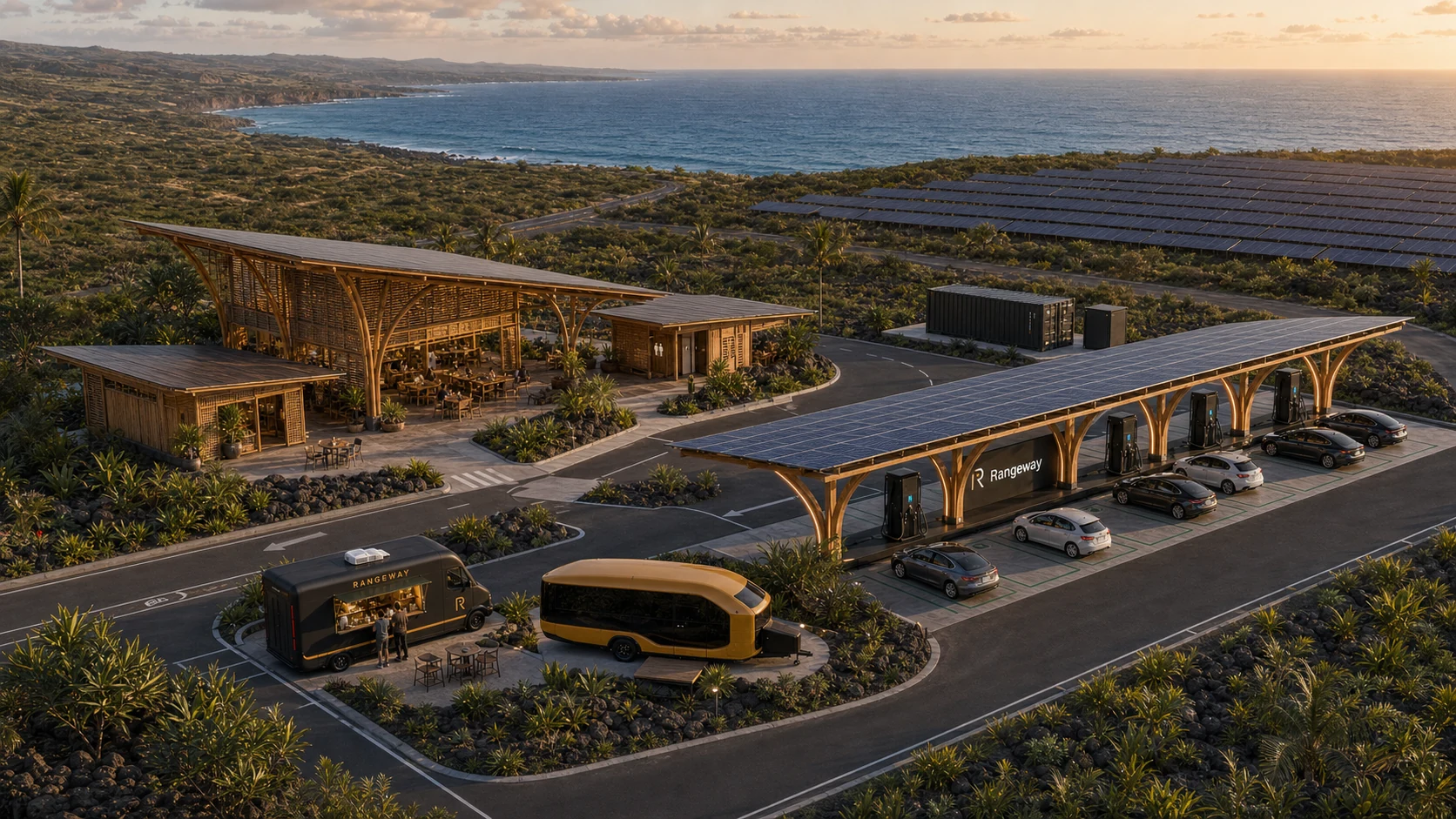
The road through Kaʻū feels different from a crossing over Saddle Road or a drive along the Kona, Kohala, or Hāmākua coasts. A useful stop should respond to the community and landscape around it, not arrive as the same building everywhere.
A useful stop should feel like it grew from the road beside it.
Rangeway imagines charging as one part of a place made for the realities of island travel, with shade from the sun, shelter from the rain, clean and comfortable places to reset, and room for local food, products, and stories.
The Japanese michi no eki, or road station, offers a useful starting point. A Hawaiʻi Island expression cannot be copied in from somewhere else. It has to be shaped with the people who know the place.
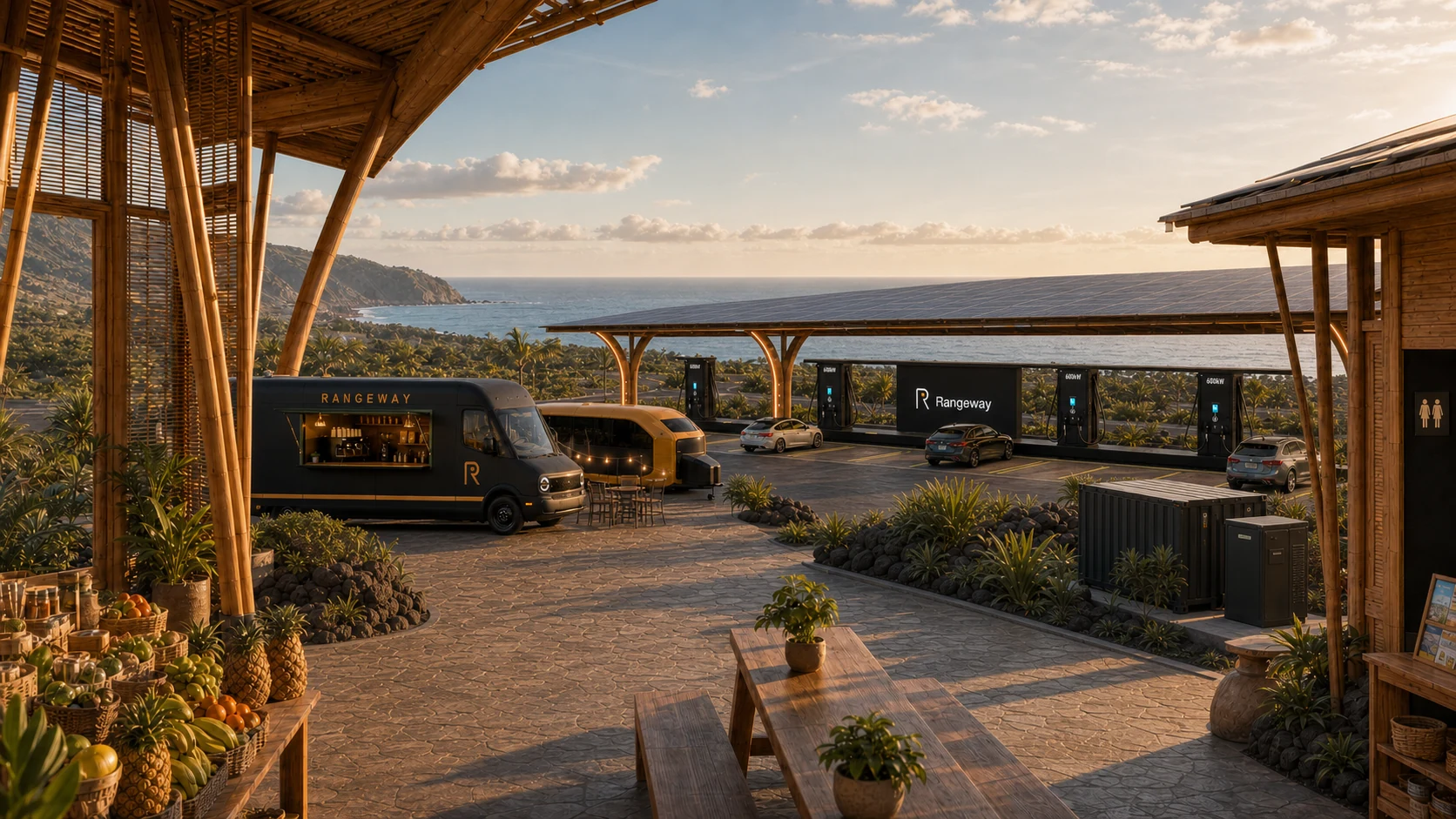
The Hawaiian value of hoʻokipa asks more than good service. It carries a responsibility to welcome with care and respect for place. For Rangeway, that means listening before designing and making room for local people, food, products, and stories to give each stop its character.
Concept visualization · Long-term design study
An upland crossing, a coastal community, and a rural town will not share the same site or operating conditions. Energy systems would be planned place by place, with solar generation and battery storage considered where they can support dependable charging.
Where the site supports it, solar canopies and nearby generation can turn island sunlight into useful energy for the road.
Battery storage can support dependable operations and help a future location respond to its local grid conditions.
Fast, dependable charging is the anchor. Shade, rest, food, and local knowledge turn the stop into a useful part of the journey.
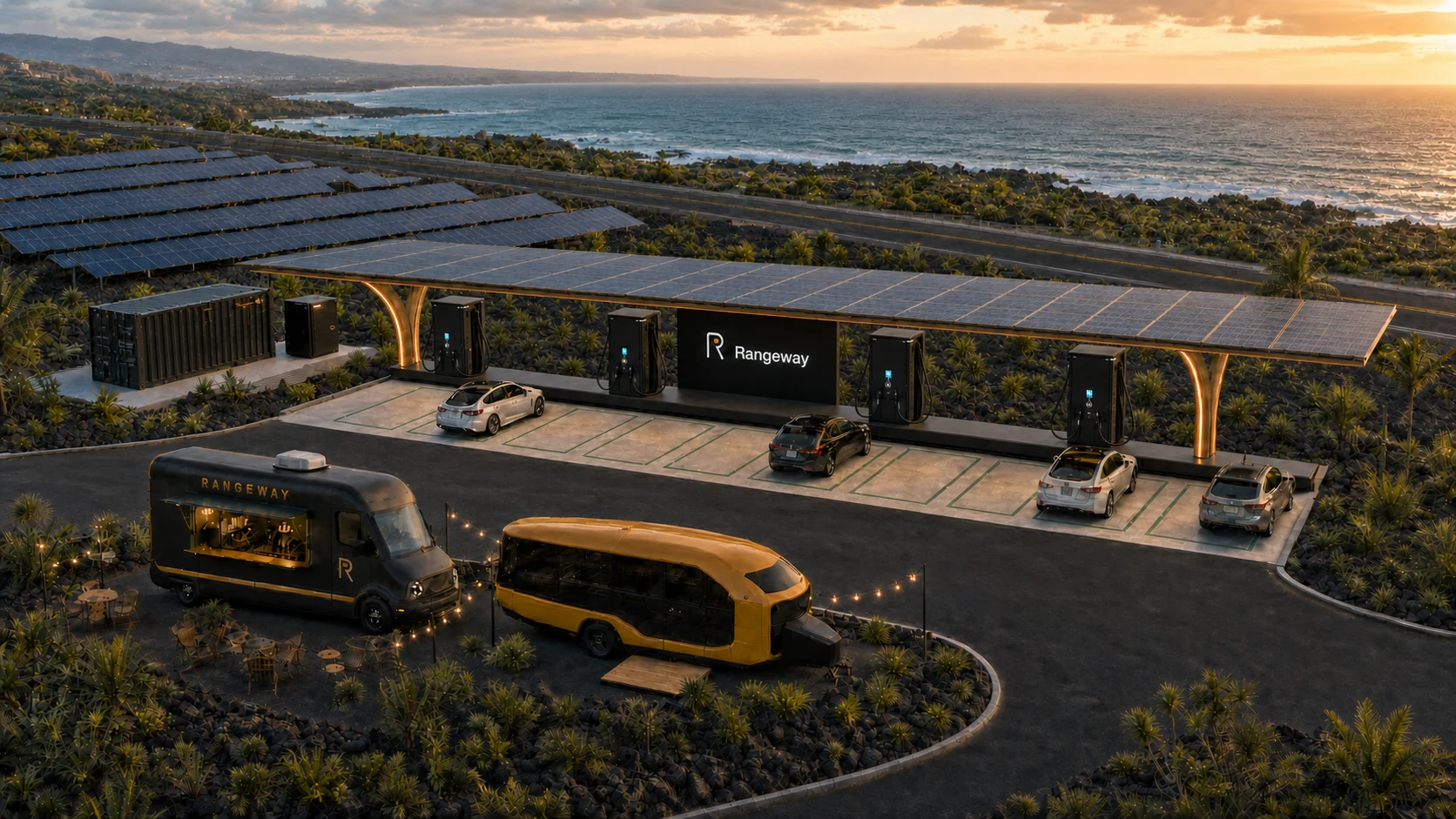
A coastal stop, an upland crossing, and a small town should not look or feel interchangeable. The Rangeway standard is a consistent level of care, with the experience shaped around the place.
Begin with local voices, community priorities, and the realities of the road.
Make the welcome tangible through shade, restrooms, seating, and spaces that feel cared for.
Create room for local food, products, materials, stories, and operators to shape the experience.
Deliver dependable charging and a practical place to pause between Hawaiʻi Island communities.
Rangeway is exploring, not announcing, what a thoughtful long-term charging platform could look like here. We welcome perspectives from community members, cultural practitioners, local businesses, land stewards, and organizations that know the island’s roads.